Brown Tap Water
Brown Tap Water.
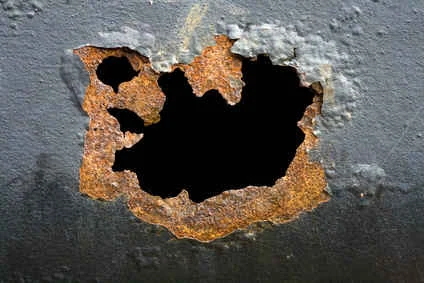
Carbon steel pipes or galvanized steel pipes are used for drinking water distribution, especially in older buildings. A problem with these materials is corrosion. For the user, it becomes visible as brown or rusty water on the tap.
If the first water taken after a long time or break becomes clear after a few seconds, you don’t have to worry. This brown water is caused by small corrosion spots in the pipe that occur with stagnant water. The water is brown or reddish brown, because loose rust particles are rinsed out when the tap is first used. This is not dangerous, neither for your pipes nor your health. No further investments are required.
If, on the other hand, the tap water is brown regularly (every time or every morning), this can be an indicator of severe corrosion in the water system. To avoid pitting corrosion and high renovation costs, it may be worth investing in preventive measures such as the Merus Ring. Depending on the type of corrosion, the corrosion rate can be reduced to a minimum, which means less rust in the pipe. No more yellow water, brown water or discolored water from your faucet.
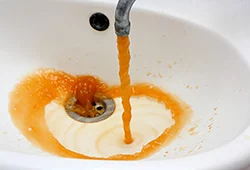
Brown Tap Water – comparing before and after installing a Merus Ring
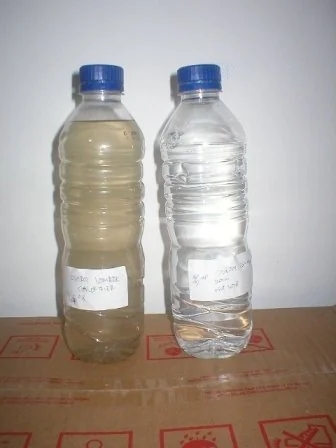
Verifying of success of removal of brown water
Take tap water samples immediately before installing the Merus Ring. Some time after installation, you should take further samples at the same faucet and after a similar length of time without taking them. This way you can compare the samples.
Please note that the water may be darker than before after installation. Existing rust must be rinsed out to achieve improvement. To support and accelerate this process, you should fully open and flush the water during the first few days after installation. The best way is to use a tap at the end of the pipe. In this way, flushing of the entire pipeline is done. Or you flush the pipe, where the problem is biggest.
Much easier for private households, is the method of simply filling the sink with water (ideally a white sink). Here you can observe very well here that the water is clearer over time, until finally only clear water comes. The discolored, brown water is usually gone in four to six weeks.
In bigger and more complex applications (big apartment buildings, hotels, hospitals), we have customers who give us the order, to execute the cleaning and monitoring tasks.
In such cases we will develop a flushing plan, and plan the dates and the locations where the monitoring is done. Then we will not only take water samples for you or support you with the visual inspection. We also analyse the iron content in the water.
On average the corrosion rate can be reduced to less than 2 MPY. This is true in drinking water application and in industrial appplications. And the corrosion rate remains stable at this low level. Replacement of the pipes is no longer necessary, which considerably reduces effort and costs.
The photographs document the installation described; the findings are those reported in the original MERUS case study. Source page: merusonline.com/brown_tap_water
Related case studies
Do you have a similar process?
Tell us about your system and operating conditions – we will assess whether a MERUS Ring is suitable.
Discuss your application info@merusonline.com