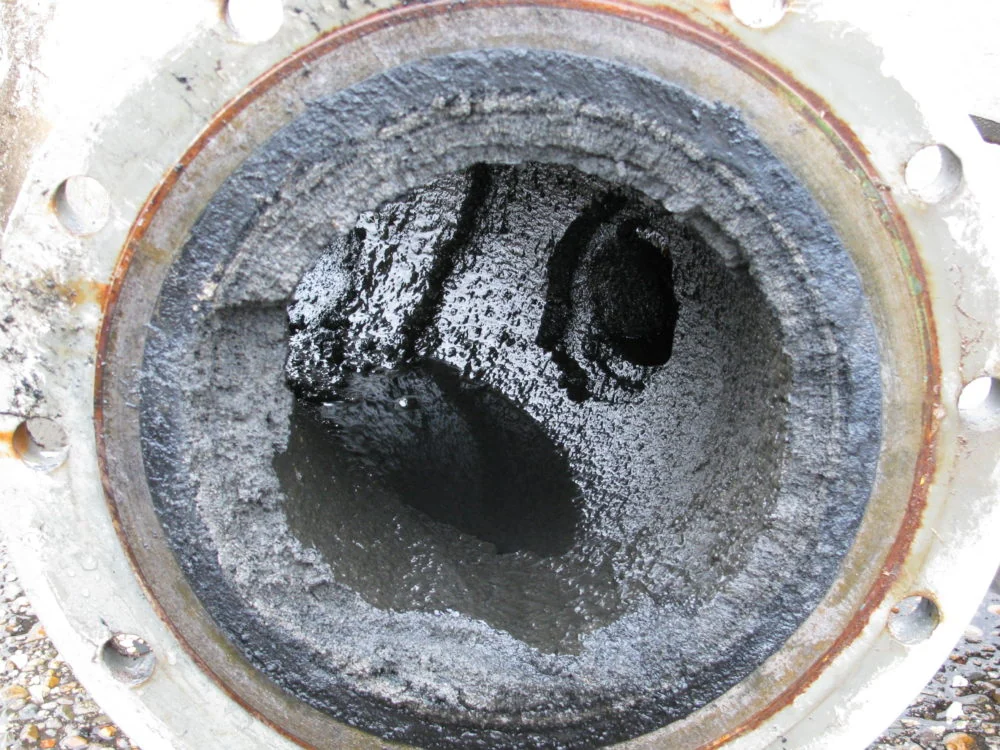
Limescale in effluent water pipe of a refinery
Q8.
The Q8 refinery is located in Europoort the port of Rotterdam, which is the biggest port in the world. Q8 is the brand name of Kuwait Oil International doing world wide operations outside Kuwait. The crude oil used for refining is comes from Kuwait, the refinery produces mainly fuel and lubricants, as well as raw material for the petrochemical industries.
Effluent water in refineries
In refineries water is used for a lot of processes. Mainly the water is used for heating or cooling the crude oil or hydro carbons. As usual in the effluent water there are many different foreign substances, such as blow down from the steam boilers and cooling towers, rinse water and traces of hydro carbons.
To meet the high environmental requirements of Q8 the effluent water is going through a row of cleaning and purification processes. At the end of this process the water which flows into the public sewage system is cleaned and controlled by Europoort regularly.
In this picture you can see one of the pipes connecting two process units. At the inside of the pipe walls a lot of limescale settled over the time. This reduced the pipe diameter and lowered the flow rate. Therefore problems occurred upstream.
As often pumps are responsible for these problems they were checked at first. But even after cleaning them carefully the flow rate didn’t increase.
Installation of a Merus Ring at the effluent water pipe
Before – After
As is the effluent water pipe has not a constant flow, no continuous monitoring is possible. The only way to check the performance of the water treatment is to open the pipe again. To compare the results the same picture as before was taken 6 months after the installation.
Compared to the first picture where the layer of deposits has been about 50mm thick, the second picture shows a significant improvement. The calcium layer at the pipe walls is now far thinner, about 25mm. Around the pipe the thickness of the layer varies because the flow rate is not the same in all areas. Where the flow rate is low it can take more time to remove existing deposits.
The last picture has been taken one year after the installation. Here you can see that there is only few deposit left. Some areas are completely free of limescale.
The reduction of deposits was slower in the second half of the year compared to the first half. The reason for this is the reduced flow speed. When the inner diameter of the pipe increases (in total 70mm) the flow speed and friction of water and pipe wall decreases. Therefore the erosion of the crust takes more time.
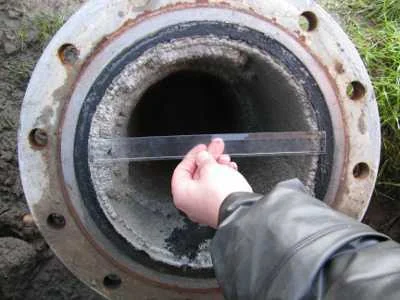
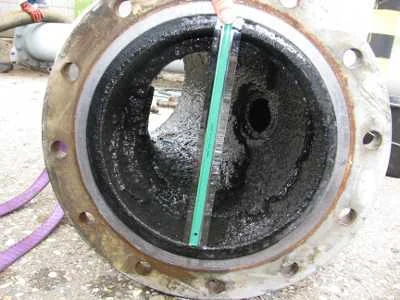
Die Fotos dokumentieren die beschriebene Installation; die Ergebnisse entsprechen dem ursprünglichen MERUS-Bericht. Quellseite: merusonline.com/effluentq8
Verwandte Fallstudien
Haben Sie einen ähnlichen Prozess?
Beschreiben Sie uns Ihre Anlage und Betriebsbedingungen – wir prüfen, ob ein MERUS Ring geeignet ist.
Ihre Anwendung besprechen info@merus.de