Removing boiler scale – gentle and environmentally friendly
Languages: English, German, French, Spanish
Where does the term “boiler scale” come from?
In some German-speaking regions, boiler scale is also called “water stone”. Both terms describe the same phenomenon: limescale deposits. The German word for boiler scale refers to the problem, the stone (limescale) in the boiler. “Water stone” refers to the medium from which the limescale problem originates.
Before central heating existed, only a few rooms in most houses were heated. Usually, wood or coal was burned in the kitchen stove.
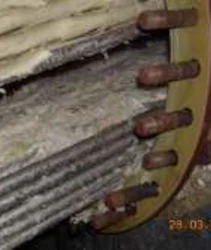
People could cook while warming the kitchen. The kitchen was often the only room in the house that was heated continuously. Inventive people came up with the idea of using the stove's heat to heat water as well. They built a so-called water vessel into the side of the stove. This was a simple container with a lid, filled with cold water from above. The fire in the stove kept the water hot. Whenever hot water was needed, it was available as long as the stove was in use. The picture on the left shows what happened next. More and more limescale deposits formed over time. The limescale became harder and harder because it was constantly fired like a brick. The coating in the vessel was as hard as stone, hence the German term for boiler scale, literally “boiler stone”.
From an energy perspective, boiler scale was not a problem at the time. Waste heat from cooking or heating the kitchen was being used. Occasionally, the vessel had to be cleaned and the scale removed when the remaining volume became too small. The common household remedies for cleaning these deposits were, and still are, vinegar or citric acid. These descaling remedies are applied to the deposits and left to work for a while. The limescale softens and can easily be removed. Using vinegar or citric acid becomes more complicated when pipes or other inaccessible areas are affected. Today
Today, energy is used much more precisely. Deposits in a heat exchanger or steam boiler are undesirable. Measures are therefore taken to prevent boiler scale from forming in the first place, for example through water softening.
Removing boiler scale
Merus's ability to dissolve existing limescale deposits also works on deposits hidden inside pipes and machinery. The loosened calcium or magnesium salts, which make up most of the boiler scale, are carried along with the hard water and flushed out. Dissolution works only up to a certain point. Once the water is saturated, it cannot absorb any more calcium. If water containing a large quantity of salts stands for a prolonged period, limescale will precipitate.
Removing existing water scale
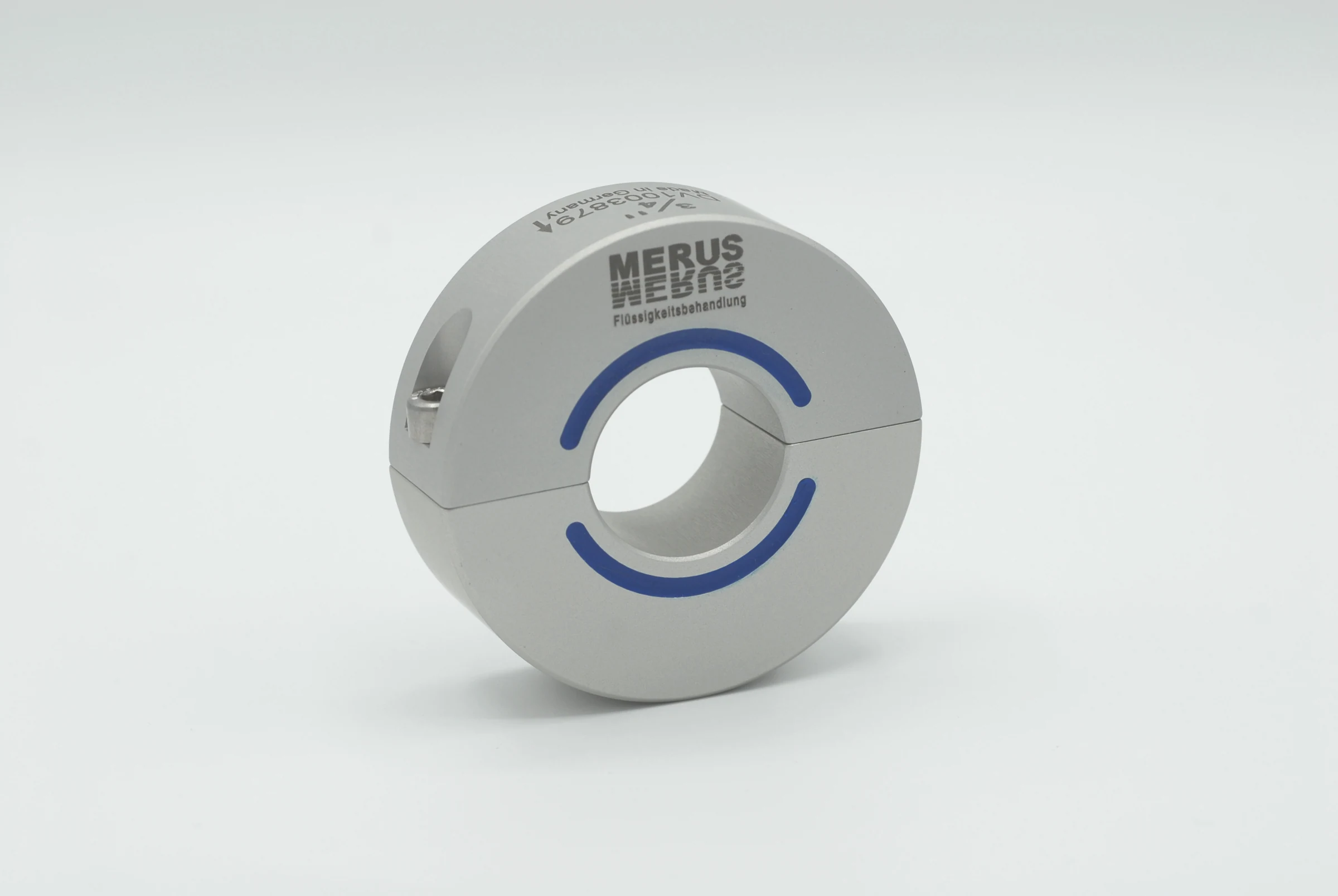
Water scale is also often associated with deposits in toilets, mainly limescale and urine scale. The Merus Ring also handles these deposits, removing them with the flushing water. Customers even report that stubborn deposits filling toilet cisterns dissolve on their own and are flushed out without further action. The limescale simply flows away when the toilet is flushed.
Preventing boiler scale with the Merus Ring
When the conditions mentioned above are met, meaning the water is used regularly and is not supersaturated, Merus prevents new boiler scale from forming. We have demonstrated this in several tens of thousands of installations over more than 25 years, in domestic, commercial and industrial applications, almost regardless of the water temperature or the type of salts involved.

Source page: merus.de/kesselstein-entfernen