
Lime Slurry used to adjust pH-value
Lime Slurry used to adjust pH-value.
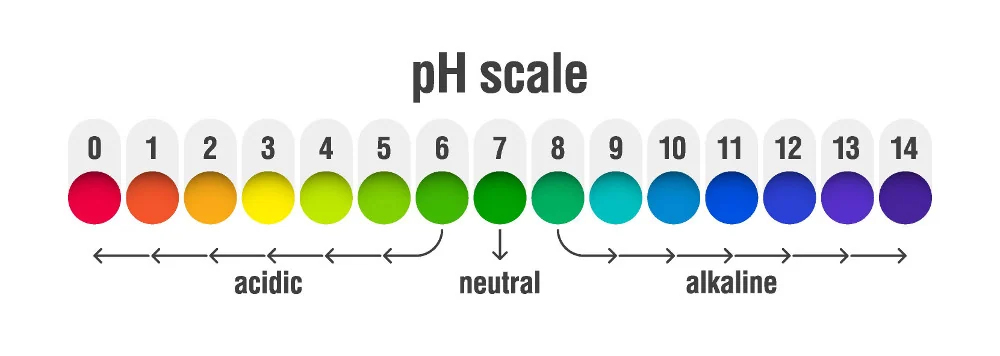
Water suppliers must treat the drinking water before it is sent to the customer. The water should be clean, free of microbiological contamination. The pH-value has to be in the range of 7.0 to 8.5, as required be the authorities. Drinking water should have a chemical balance and be neither too sour nor too alkaline. Depending on the raw water, one process step is to stabilize the pH-value.
For this purpose lime slurry is used. Lime slurry is a suspension of calcium hydroxide in water. People call this slurry also „liquid“ lime, quicklime or whitewash. This slurry or hydrated lime is chemically very active. This suspension is concentrated to such an extent that pumping is still possible. As long as the slurry can be pumped, it is quite easy to handle.
The disadvantage of limestone slurry, it is very abrasive and viscose. Often hoses are used rather than pipes as they are easier to exchange when blocked. If the slurry comes to a standstill, the calcium hydroxide starts to sediment. Forming calcium deposits.
Limeslurry causes several technical problems for the water suppliers. Hoses, pumps, pipes and water tanks are heavily affected by calcium carbonate.
Especially the pumps supplying the tanks with the lime slurry are often blocked by limescale. If the sedimentation happens in the pump, the pipe wheel can be stuck. Due to the abrassion of the slurry, the pump impeller is subjected to heavy wear and must be replaced. This leads to frequent downtimes. There needs to be a service team available 24/7.
Lime slurry pump cause less problems
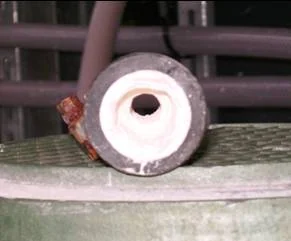
The first photo shows the inside of one of these hoses after a few days of operation. It was taken right before the Merus Ring was installed. The hose is 180 m long and looked the same at both ends. The customer and we came to the conclusion that the deposits were distributed in the same way over the entire length of the hose.
We installed one Merus Ring right behind the shut-off valve, right at the beginning of the hose.
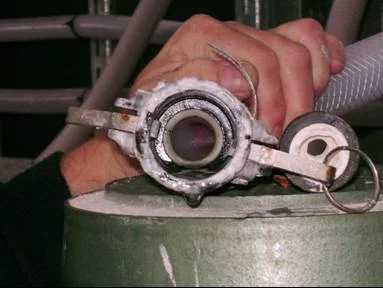
After the installation of the Merus ring, no more limescale could settle in the hose. As you can see in the second picture, the tube treated with the Merus ring is clean. Lime is only visible on the outside of the nozzle.
The pumps, which previously required frequent maintenance, are no longer blocked and far fewer maintenance and emergency repairs are required. A positive side effect was that the service life of the pumps was significantly increased. The process and operation simply run undisturbed.
Lime Slurry more applications
Calcium hydroxide is not only used by water suppliers. Especially in the heavy industry or in petrochemical plants a lot of industrial waste water is produced.
Slurry of calcium hydroxide is also used here for neutralization. Odour control or metal precipitation are further applications.
The photographs document the installation described; the findings are those reported in the original MERUS case study. Source page: merusonline.com/limeslurry
Related case studies

Do you have a similar process?
Tell us about your system and operating conditions – we will assess whether a MERUS Ring is suitable.
Discuss your application info@merusonline.com