Exhaust gas cooling system
JSW Steel Limited.
Customer: JSW Steel Limited, India
Jindal Steel Ltd. is one of India's most modern and environmentally friendly steelworks. It uses the latest technologies in both upstream and downstream processes.
A steelworks naturally has many processes in which heat must be reduced. In this case, exhaust gas needs cooling. Cooling water is sprayed into the chimney through a ring of nozzles. This both lowers the gas temperature and washes particles out of the gas.
Limescale deposits in the system gradually reduce cooling efficiency and affect pressure and flow rate. Regular cleaning intervals are required. Naturally, this is possible only if the entire production process is interrupted.
The gas temperature reaches several hundred degrees, so much of the cooling water from the spray nozzles evaporates immediately upon contact with the gas. The evaporating water leaves limescale behind, causing heavy scaling and blockages in the nozzles.
The theoretical operating flow of this cooling circuit is 380 m³/hour. Over time, limescale deposits became so severe that the flow fell to around 250 m³/hour. The process therefore no longer worked efficiently, and the required exhaust gas temperature could no longer be achieved.
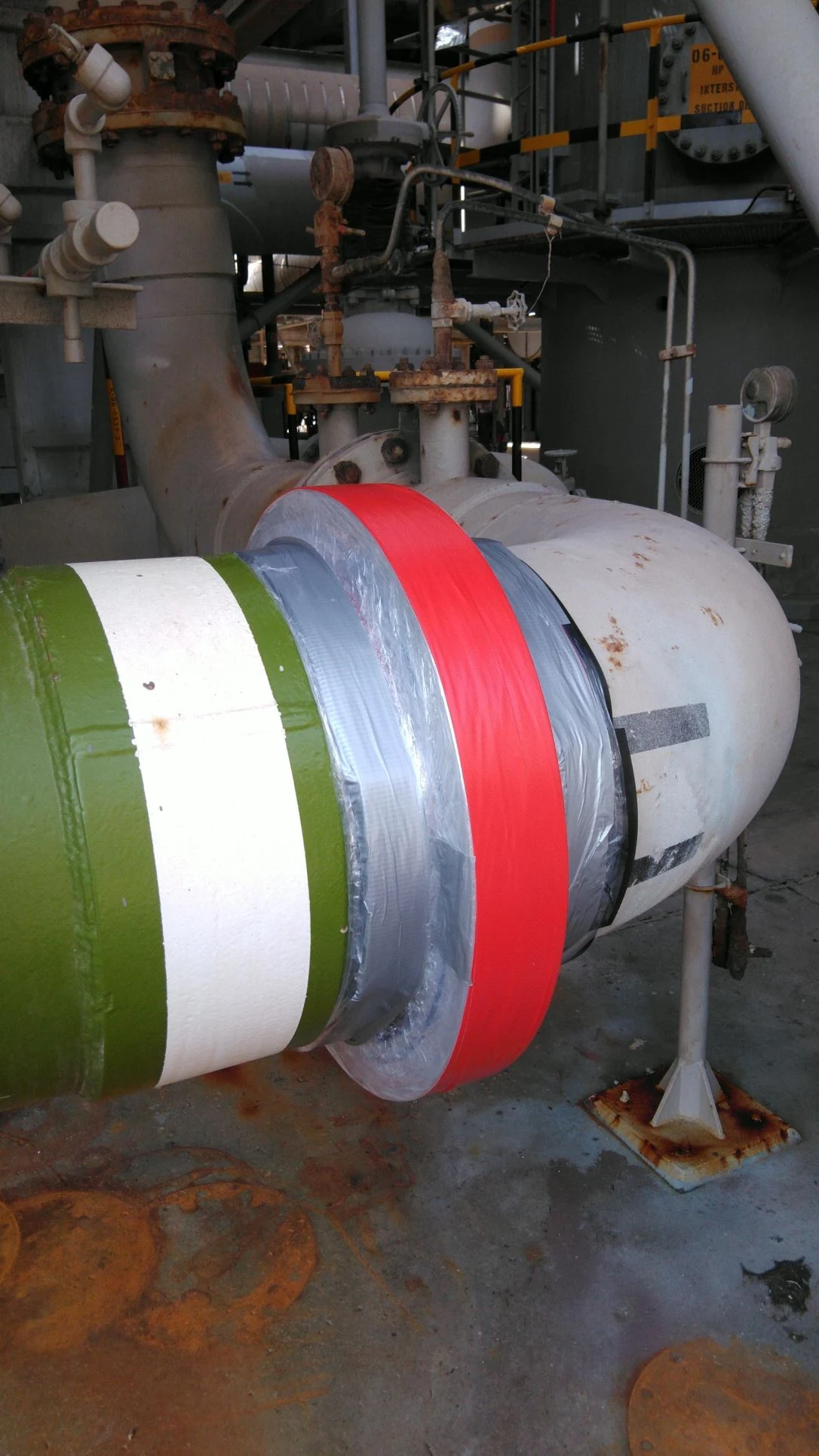
Merus Rings were installed both on the feedwater line and upstream of the pumps, with the aim of stabilizing the cooling water's operating flow and pressure.
The result
A reversal of the trend could be observed a few days after the Merus Rings were installed. The flow rose significantly, from less than 300 m3/hour to more than 330 m3/hour.
This is due to reduced limescale deposits in the pipes and, more importantly, cleaner nozzles in the chimney. As the operating flow stabilized, pump backpressure fell, reducing the pumps' electrical power demand.
The operating flow is expected to return to its original value over time.
Another very interesting aspect is that dust particles in the gas have also been greatly reduced. The authorities have set a limit of 5 mg/m3. This plant's values had always been close to the limit. Since the Merus Rings were installed, the dust-particle value has been acceptable and well below the statutory limit.
The photographs document the installation described; the findings are those reported in the original MERUS case study. Source page: merus.de/abgaskuehlungsanlage
Related case studies
Do you have a similar process?
Tell us about your system and operating conditions – we will assess whether a MERUS Ring is suitable.
Discuss your application info@merusonline.com