Hot water boilers and instantaneous water heaters
Languages: English, German, French, Spanish
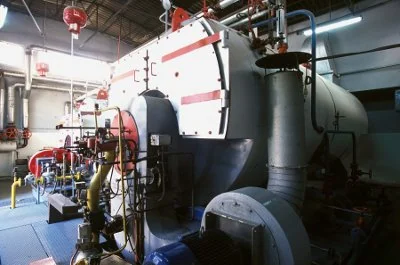
A hot water boiler is generally a tank with a heat exchanger. These boilers are usually connected to the central heating system, which supplies their energy. They heat drinking water or service water. An instantaneous water heater, by contrast, has no storage tank: the water is used as it is heated, in a single pass.
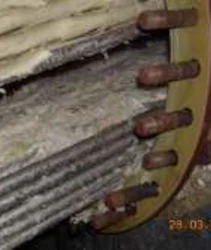
Temperatures in boilers and instantaneous water heaters are high. Hard water leads to heavy limescale deposits. Steel or enamel-coated boilers may also start to rust after several years. Stainless steel boilers are therefore increasingly used today.
Boilers and instantaneous water heaters should have as few limescale deposits as possible, particularly on heat-transfer surfaces, because limescale acts as insulation. Just 1 mm of limescale reduces heat transfer by up to 14%.
Our solution
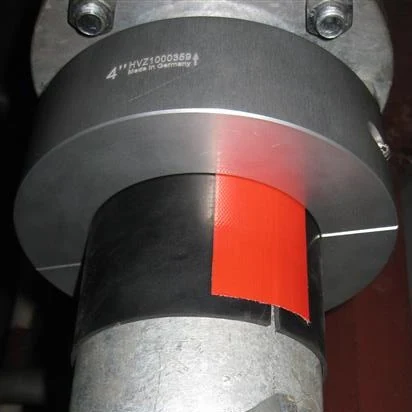
Merus Rings installed on a boiler's supply line or circulation return line keep the lime dissolved in the water. This applies at temperatures well above 100 °C. We have done this hundreds of times in practice. Merus Rings are used not only in hot water boilers but also in small steam generators and large industrial steam boilers. If a boiler or instantaneous water heater already contains scale, the water starts dissolving it again and the scale is flushed out. Any existing rust deposits are loosened, converted and flushed away. We conducted a study in Malaysia on energy savings in steam boilers.
There is one limitation when electric heating coils supply the heat for the water. As a by-product, these coils also generate electric fields. The fields can reduce the effect of Merus. In such cases, descaling is less extensive. The formation of new limescale deposits is greatly reduced.
Related case studies
Source page: merus.de/wasserboiler