Water Injection Well
Water Injection Well.
Our customer, a medium sized oil company in Argentina, faces problems with their water injection. It was decided to carry out a test to check how Merus Rings can help to lessen their problems.
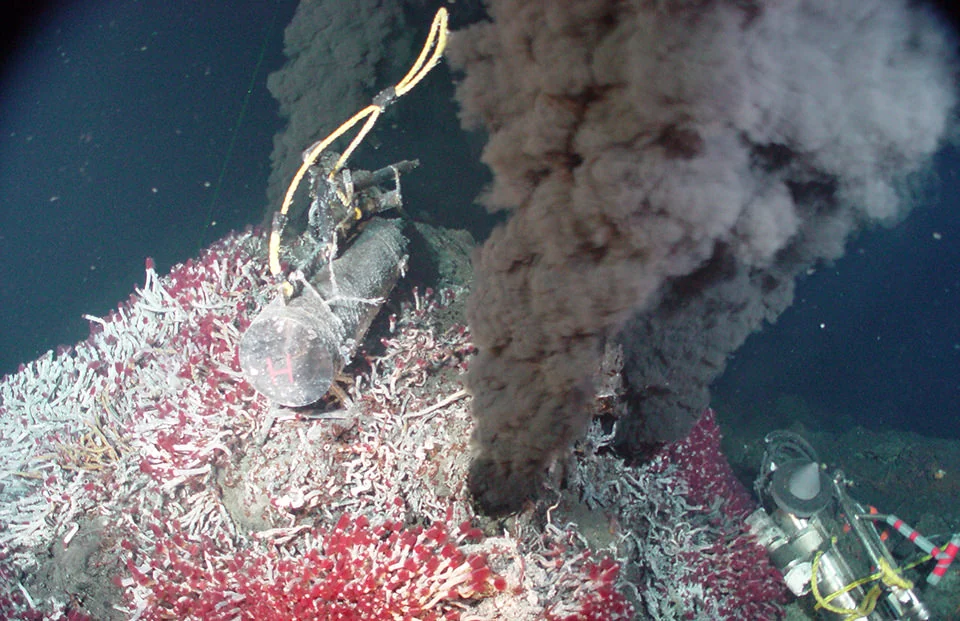
What is a water injection well?
In an oilfield, when oil is pumped from a production well, the pressure in the reservoir reduces. In order to overcome this, water injection direct into the reservoir is done in order to balance the pressure. For this purpose injection wells are drilled in the oilfield to bring the water into the reservoir.
It is hardly possible to inject valuable drinking water into the reservoir. Therefore the majority of the water used for the injection, is so called produced water, which is recycled. Crude oil is a fluid, which is a mixture of hydro carbons and water. This is separated in dedicated machines. Both the oil and the water are cleaned and finaly the produced water is recycled and injected again into the formation.
In the actual case there is a water tank, supplying several injection wells with water. We choose a 3.2 km long pipeline to perform the trial. The the temperature of the water is around 50°C, the flow 47 m3/h, at a pressure of 11kg/cm2.
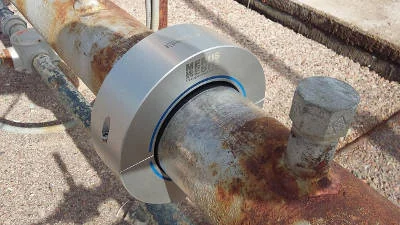
The Merus Ring was installed at the beginning of the 4″ (DN100) pipeline. Direct before the point of installation one incrustation coupon and one corrosion coupone was placed. Another set of coupons was placed before the injection close to the well.
Corrosion rate, incrustation rate and SRB clear reduced
The photos show a incrustation coupon at the top and a corrosion coupon at the bottom. The coupons on the left has been placed before the Merus Ring and was effected by untreated injection water. The coupons on the right have been installed an the injection wells app. 3.2 km downstream the Merus Ring. The difference on the incrustataion coupon in between before and after is obvious. The difference at the corrosion coupon, one have to have a closer look.
All three monitored values has reduced during the 4 month trial by 75% and more. This has been the success criteria set by the customer. And of course no changes at the existing chemical dosing during the 4 month trial. We had all the time the same conditions.
This field test could show impressively how good Merus rings are. Under what difficult conditions Merus can work.
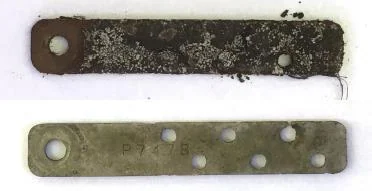
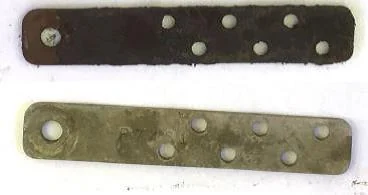
The photographs document the installation described; the findings are those reported in the original MERUS case study. Source page: merusonline.com/water-injection-well
Related case studies
Do you have a similar process?
Tell us about your system and operating conditions – we will assess whether a MERUS Ring is suitable.
Discuss your application info@merusonline.com