Microbiological contamination in water
Languages: English, German, French, Spanish
Drinking water contamination
In Europe, drinking water from public suppliers is generally free of microbiological contamination. The legally permitted limits under the drinking water regulations issued by the EU are observed. Drinking water parameters are continuously and strictly monitored by the authorities. Tests are carried out on chemical parameters and for microbial contamination.
Suppliers regularly test these parameters only at the waterworks, before the drinking water enters the distribution network. What happens afterward, in the pipes on the way to the user, is not continuously monitored. Tests are performed only when irregularities arise. Although the distribution network belongs to the supplier, compliance with the requirements and limits of the drinking water regulations cannot be guaranteed at the end of the water pipe.
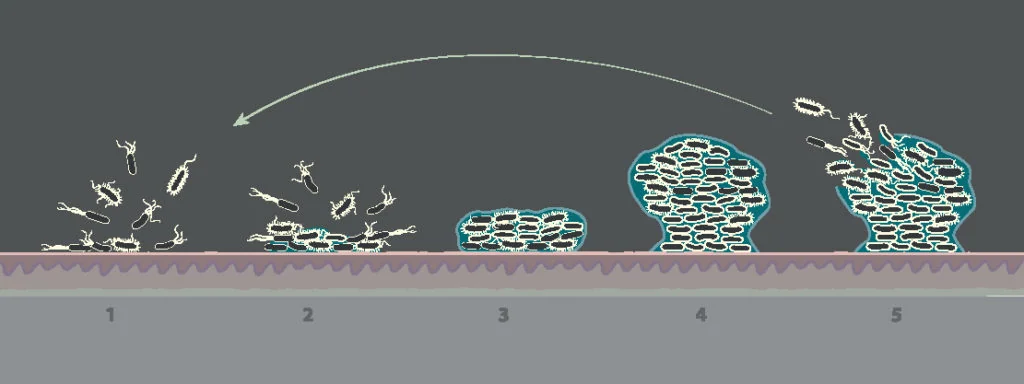
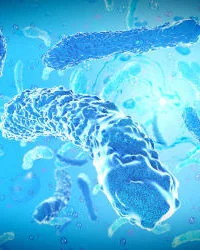
Large and complex water systems, such as those in hotels, office complexes or hospitals, are more at risk than single-family homes. Microorganisms from the public drinking water network and areas with less flow in the drinking water installation can give rise to biofilms. Germs and bacteria can multiply in these biofilms. Coliform bacteria or Legionella are frequently detected.
In the worst case, Legionella can cause very serious illness. Health authorities are therefore required to monitor this in public buildings and order appropriate measures. These regulations also apply in apartment buildings and must be implemented by the owner or property manager. If concentrations, particularly of microorganisms, exceed the requirements of the German Drinking Water Ordinance (TrinkwV), the testing laboratory is obliged to notify the competent authority.
Service water - Contamination in utilities
Especially in open systems using industrial water, so-called biofouling or algae growth can occur. This means that microorganisms multiply in the water and, over time, form a biofilm on pipes or inside machinery.
Legionella in cooling towers has also attracted increasing attention (see also the 42nd BImSchV). Extremely high microbial counts have been found in cooling water. Since Legionnaires' disease is transmitted through droplets, cooling towers should not contain excessive numbers of these bacteria either. Consequently, people should also avoid being downwind of a cooling tower.
The resulting biofilm impairs heat transfer, for example. If biomass is carried along by the flow in the pipe, it can also block valves and affect entire systems. Some bacteria in biofilms even secrete highly aggressive substances that can cause corrosion.
Chemical solutions are not always successful here, or require enormous expenditure when large quantities of water are involved.
Seawater - Contamination by algae, mussels and barnacles
As the seas warm, microbiological contamination is also increasing. We hear of algal blooms near the shore and beaches that have to be closed, and of algae in rivers that can be dangerous to people and animals. During testing, we repeatedly find that parameters and limits are significantly exceeded. Of course, we cannot treat the entire sea. But we can address technical problems in plants and machinery that come into contact with seawater or river water, maintaining or improving their performance. The environment benefits too when problems are prevented instead of being solved afterward with chemicals.
From theory to practice
In practice, biofouling or biofilm develops in different places and to different extents. Particular care is needed when dealing with Legionella. We therefore consider it important to solve these problems through individually tailored approaches.
Nevertheless, the application examples can, in principle, also be transferred to other cases.
Our product - The Merus Ring
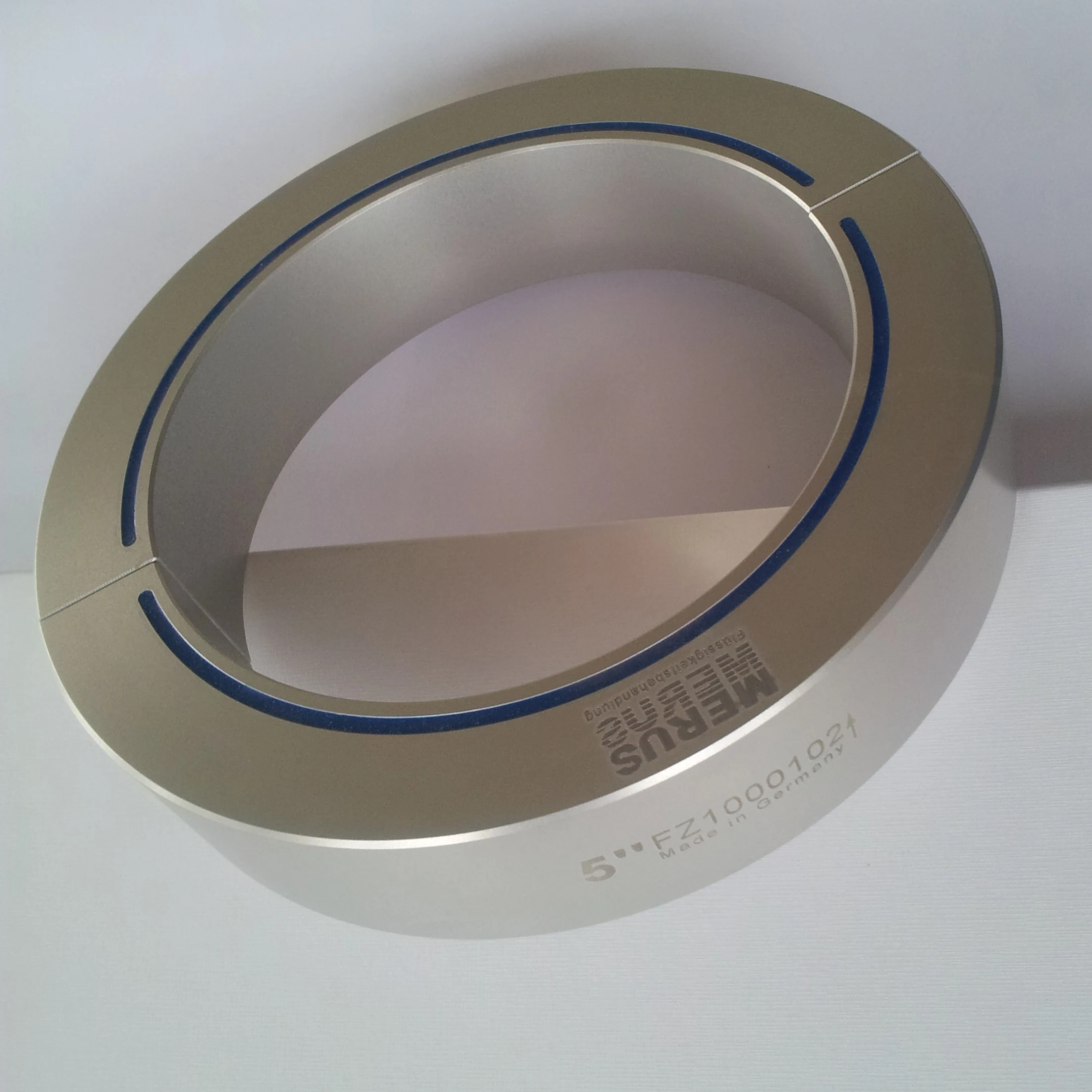
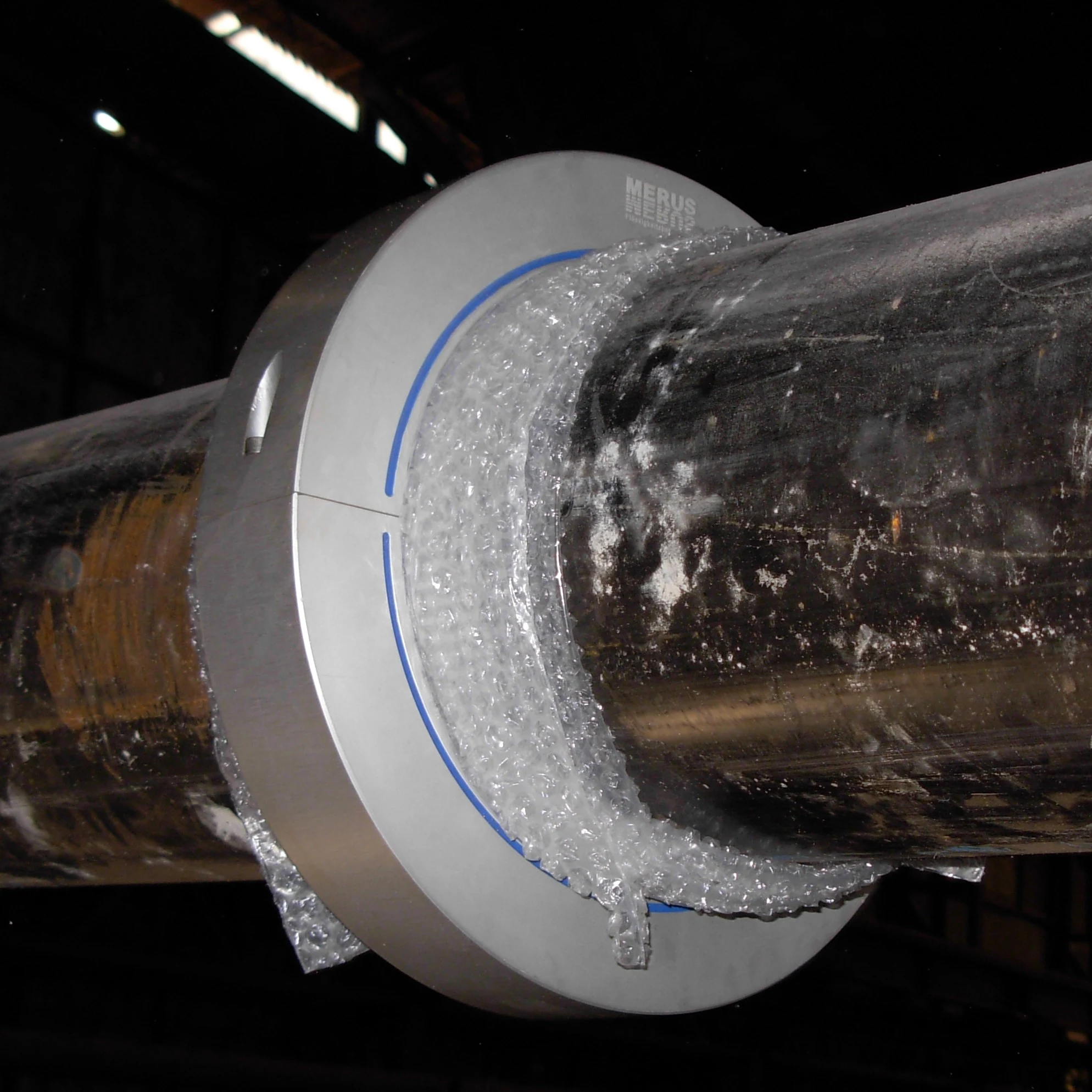
We use our Merus Ring Bio to combat biofilm. Like all Merus Rings, it is simply placed around the water pipe and begins working immediately.
Because no contact with the liquid is required, installation could hardly be simpler. The Merus Ring changes the properties of the water through oscillations. These can also be transmitted through the pipe wall to the liquid.
Once installed, the Merus Ring continues to work for many years.
It is a ring made of aluminum. Before the Merus Ring reaches you, it is charged using a special process. This enables it to emit targeted oscillations.
These oscillations cause deposits to be flushed out of the water pipe. In the case of microbiological deposits, this also removes the habitat of bacteria and other organisms. They are not killed; instead, they lose their home and disappear over time.
This directly tackles the cause of biofilm. The solution is therefore more sustainable than merely treating symptoms.
Does that sound unbelievable? Read more here...
Source page: merus.de/bio